
In every conflict—professional, social, or political—the strongest advantage is rarely brute force. The true edge lies in securing the moral high ground. When you are seen as the one acting with integrity, purpose, and principle, you gain a powerful psychological position. From there, your influence expands, your alliances deepen, and your opponents struggle to justify resistance. This is the essence of seizing the moral high ground: winning the narrative before the battle even unfolds.
Why the Moral High Ground Is the Strongest Strategic Position
Winning isn’t just about tactics and action—it’s about perception. People naturally support individuals who appear fair, disciplined, and ethical. When your intentions look pure, the world aligns with you. But once you lose this perception, even the best strategies crumble. Your opponent may have strength, resources, or aggression, but if you hold the ethical advantage, they become the villain of their own story.
This psychological leverage forces others to hesitate, doubt themselves, or even shift to your side. It turns public opinion into a silent ally—one that can’t be bought, threatened, or defeated.
Historical Example: How Gandhi Won Against an Empire Without Lifting a Weapon
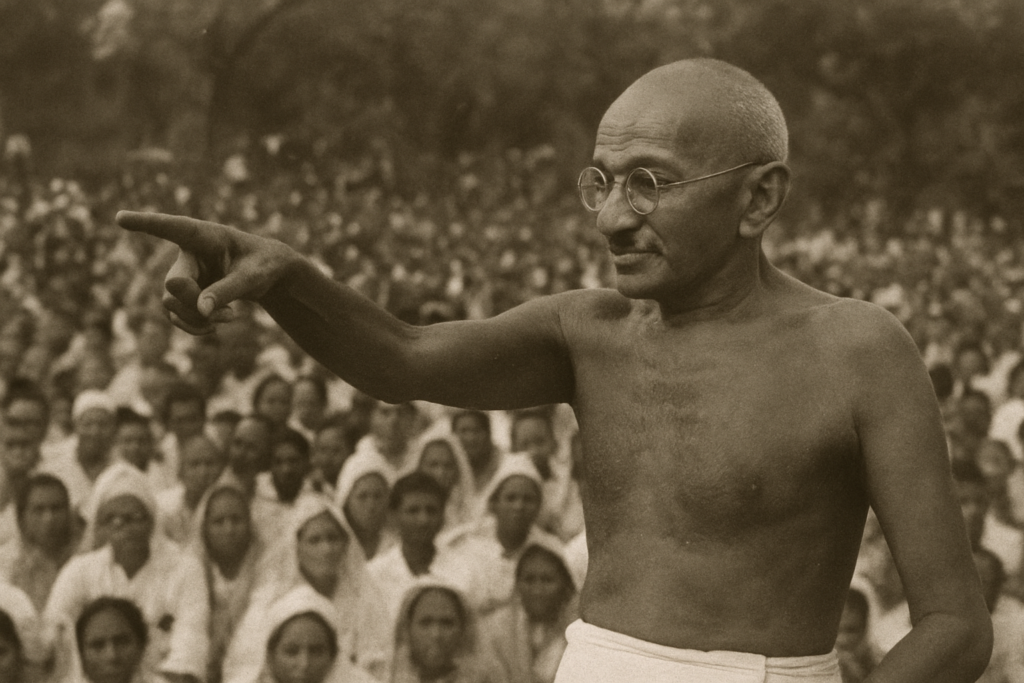
One of the most compelling demonstrations of occupying the moral high ground comes from the Indian independence movement, particularly the leadership strategy of Mahatma Gandhi. Faced with an empire that possessed vast military power, economic dominance, and global political influence, he understood that direct confrontation would be suicidal. Instead, he chose a strategy rooted entirely in principle.
Gandhi framed the struggle not as a clash of weapons, but as a battle of righteousness. By practicing non-violence, discipline, and moral clarity, he positioned himself—and the movement he led—on unshakably high ethical ground. At every stage, he emphasized justice, dignity, and humanity, making it nearly impossible for the British to justify their harsh responses.
When the empire used force, the world saw cruelty;
when Gandhi remained peaceful, the world saw courage.
The contrast was morally devastating for the British position.
With every act of resistance that was met with repression, more global sympathy shifted toward the Indian cause. Newspapers across the world criticized the empire. Intellectuals, institutions, and foreign leaders condemned the brutal tactics used against non-violent civilians. The moral narrative became so strong that even within Britain, many began questioning the legitimacy of colonial rule.
Gandhi’s refusal to respond with aggression turned public opinion into a weapon more powerful than any army. By elevating the conflict to a higher cause—freedom, justice, and human rights—he forced the British into the role of antagonist in a story the entire world was watching.
The result was remarkable:
A nation liberated not by force, but by the psychological and moral leverage of one man’s strategic clarity.
How to Establish Credibility Before the Conflict Begins
The first step is positioning yourself as a figure of trust. People follow leaders who represent stability rather than chaos. By demonstrating fairness, discipline, and clarity, you create an image of someone who is above petty conflict.
When a dispute arises, you are already seen as the reasonable one. Others assume you have the right intentions, even when you take bold or decisive action. A reputation built early protects you when the storms arrive later.
The Power of Letting Your Opponent Overreach
The moral high ground becomes most powerful when your opponent loses theirs. And ironically, people often sabotage themselves when they feel threatened. By staying calm, composed, and focused on principles, you create a contrast between your behavior and theirs.
If they overreact…
If they attack emotionally…
If they use dirty tactics…
You appear even stronger.
Your restraint highlights their instability. Your discipline exposes their desperation. And without ever throwing the first punch, you win the deeper battle: credibility.
When Silence Speaks Louder Than Confrontation
In many conflicts, speaking less is a weapon. Let your opponent reveal their flaws through impatience or aggression while you stay composed. Silence shows confidence. Defensiveness shows guilt.
By not reacting emotionally, you maintain control of the narrative. People assume that the one who is calm must be the one who is right. This assumption is a quiet but devastating advantage.
Using Higher Principles as Your Shield
Claiming the moral high ground works only when your actions reflect bigger ideals—justice, fairness, responsibility, loyalty, or integrity. When your decisions align with meaningful principles, it becomes hard for critics to attack your character.
Every action feels justified.
Every move appears thoughtful.
Every decision looks purpose-driven.
This shields you even during difficult situations. Your opponents may accuse you, but their words fall flat because the public sees your intention as noble.
How to Frame Your Strategy for Maximum Support
The most powerful leaders frame their moves as necessary steps to protect a greater cause. Instead of focusing on winning, they emphasize purpose:
- “I’m defending the team’s interests.”
- “This is the right direction for the organization.”
- “We must ensure fairness for everyone.”
By elevating your purpose, you elevate yourself. You shift attention from personal ambition to collective benefit—an unbeatable narrative.
Turning Conflict Into an Ethical Mission
Instead of engaging in petty arguments, transform the conflict into a matter of principle. This reframes the entire situation. You are no longer fighting for yourself—you are fighting for what is right.
This instantly gains support because people want to stand with those who champion higher causes. It also corners your opponent: to fight you is to oppose those very principles.
Avoiding the Trap of Hypocrisy
The moral high ground must be earned, not faked. Pretending to hold noble values while acting selfishly eventually collapses. If your actions contradict your stated principles, you lose credibility overnight.
Consistency is key. Your behavior, your decisions, your communication—all must reflect the same values. If people sense alignment, they trust you. If they sense a contradiction, they abandon you.
Using the Moral High Ground Without Becoming Self-Righteous
This strategy is not about acting superior. It’s about grounding yourself in clarity and purpose. The moment you appear arrogant, judgmental, or self-congratulatory, you lose sympathy and become intolerable.
Stay humble.
Stay focused.
Let others praise your integrity—never praise yourself.
This preserves the power of your position without alienating the people observing you.
The Long-Term Advantages of Holding the Ethical Position
Winning once brings temporary victory, but winning with integrity builds a legacy. People remember leaders who remain composed and principled under pressure. They reward them with trust and loyalty.
The moral high ground is not just a tactic—it’s an investment in your reputation. It strengthens your influence long after the conflict ends.
Final Insight: You Win by Being Unshakably Right in a World Full of Chaos
The ultimate power in conflict isn’t intimidation, aggression, or manipulation—it’s legitimacy. When people believe you are acting from a place of principle, you become untouchable. You rise above the conflict, standing on higher ground, watching your rivals struggle in the mud.
That is the true brilliance of this strategy.
You win before the battle begins.
You win again during the conflict.
And you win even after the dust settles.
By occupying the moral high ground, you transform yourself into the most stable, respected, and undefeatable force in the room.